What is alcohol addiction?
‘Addiction’ means having a dependence on a substance or activity. Unlike someone who simply ‘wants’ something, a person with an addiction will have physical cravings and urges for the substance they’re addicted to.
Being addicted to alcohol, sometimes called being an alcoholic, means that you have a physical dependency on alcohol. There are changes that happen in the brain of someone who drinks a lot of alcohol, which make them have physical withdrawals if they don’t drink. Alcohol withdrawal symptoms can include insomnia, nausea, sweating, anxiety and physical discomfort. If you are experiencing alcohol dependence, it also means you need to consume more alcohol to achieve the intended effect.
In this article, we'll cover:
Signs of alcohol dependence
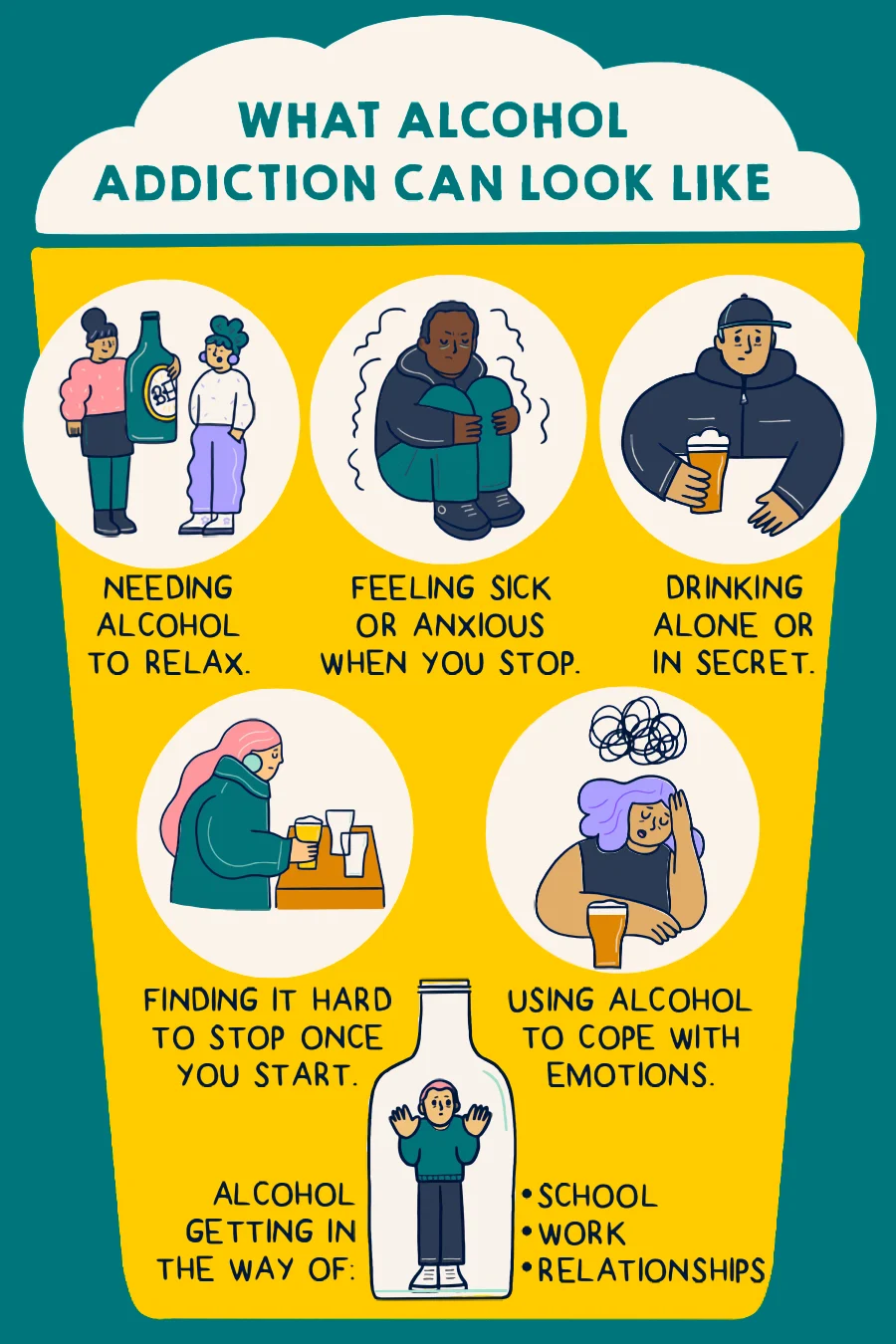
Click here to download a transcript of this infographic.
Why is alcohol addictive?
Alcohol can be addictive because it affects your brain's reward system. It releases feel-good chemicals like dopamine, which can lower your sense of inhibition, anxiety and stress, while boosting confidence. The more you drink, the more tolerance you can build to alcohol. Over time, your body may start to depend on alcohol to feel good or even normal. It's important to know that addiction can happen to anyone, and it's not a sign of weakness.
What causes alcohol addiction?
Alcohol addiction can happen because of a mix of factors. These might include genetics, mental health issues, stress, trauma, or social pressures. Sometimes, what starts as casual drinking can slowly become a problem without you even realising it. Remember, it can affect anyone, regardless of their background.
What is the difference between alcohol enjoyment and alcohol dependence?
Enjoying alcohol means you can take it or leave it. You might have a drink socially but don't need it to feel good or function. Dependence, however, means you feel a strong urge to drink and might struggle to stop once you start.
Enjoying alcohol can look like:
having a glass of wine with dinner on weekends
sharing a few beers with friends watching a sports game
easily saying ‘no’ to a drink when you don't want one
stopping after a set number of drinks
enhancing your social experiences without dominating them
your study, work and personal responsibilities remaining unaffected
occasional mild hangovers that don't significantly impact your daily life.
Dependence on alcohol can look like:
drinking daily or almost daily
regularly drinking more than planned
finding it difficult to stop once you start
feeling anxious or irritable when alcohol isn't available
making excuses to drink or hiding how much you’re drinking
continuing to drink even when it’s causing problems in your life
constantly thinking about your next drink
planning your days or event around alcohol
feeling guilty or ashamed about your drinking habits
developing tolerance and needing more alcohol to feel the same effects
using alcohol to cope with stress, anxiety, or depression.
Health problems from alcohol addiction
There are a range of short-term and long-term side effects of being addicted to alcohol.
Short-term symptoms of alcohol addiction include:
vision problems
memory problems (blackouts)
depression
anxiety
paranoia
seizures
poor nutrition, resulting in weight loss, reduced energy and other health issues.
Long-term symptoms of alcohol addiction include:
permanent brain damage
liver damage
high risk of cancers, such as mouth and throat cancers
high risk of cardiovascular disease, such as a stroke and heart failure
more frequent illness, because of a weakened immune system.
Getting help for alcohol addiction
The first step to getting help for addiction is recognising the problem. If you think you might be addicted to alcohol, it’s important to seek professional help. You can start by visiting your GP, who can also refer you to a range of other professionals and specialist services.
Alcohol addiction treatment options and support services
Some of the services you can access for more information and support with alcohol dependence include:
Australian Alcohol and Drug Information Service - you can call them directly on 1800 250 015
Counselling ONLINE - free online drug and alcohol counselling.
Group therapy (support groups such as Alcoholics Anonymous and SMART Recovery) and drug therapy (speak to your GP about medicines that can help with withdrawals) are other options.
What can I do now?
Read more about alcohol and drugs.
Book an anonymous and free text-based chat with a peer worker through ReachOut PeerChat.
Make an appointment with your GP to discuss any concerns you have about how much you’ve been drinking.