How to set goals
Setting goals can help give you direction, boost your confidence and keep you focused – but they work best when they’re made for you, not for anyone else. Here’s our step-by-step guide to setting goals that actually stick.
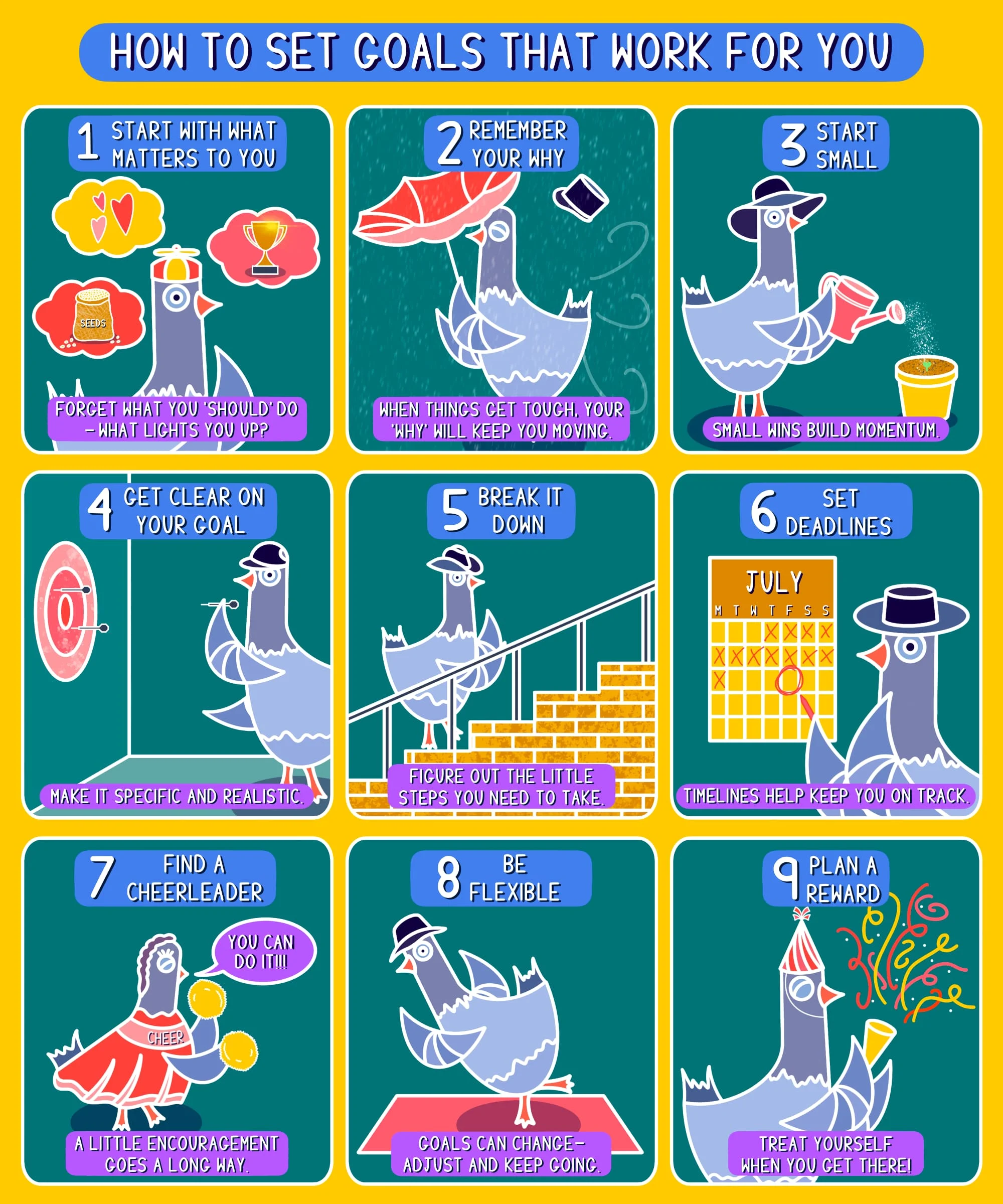
Download infographic transcript.
Start with what matters to you
You don’t have to follow someone else’s path. Forget what you ‘should’ do – what do you really want? Whether it’s learning a new skill, exploring a different career or finding ways to give back, start by thinking about what lights you up.
Remember your why
Working towards your goals isn’t always easy, but keeping your reason in mind will help you push through challenges. Maybe it’s about creating change, supporting others or making your younger self proud.
Start small
Small wins build momentum. Even tiny steps count. Keep it simple at the beginning to build your confidence.
Get clear on your goal
The clearer and more realistic your goal is, the easier it’ll be to take action. Try to make it specific and achievable. For example, instead of ‘I want to get fit,’ try ‘I want to go for a 15-minute walk three times a week'.
Break it down
Big goals can feel overwhelming. Break them into smaller, manageable steps to make progress feel achievable.
Set deadlines
Deadlines help you to stay motivated. Set a target date for each smaller step to keep yourself on track.
Find a cheerleader
Having someone in your corner makes a big difference. Find a friend, mentor, family member, or teacher who can encourage you and keep you accountable.
Be flexible
Things don’t always go to plan – and that’s okay. If your goal needs to change, adjust and keep going!
Plan a reward
Give yourself something to look forward to. Whether it’s a treat, a day off or doing something you love, planning a reward can help you stay motivated.
Remember: there’s no one right way to reach your goals. What matters is that they work for you. Take your time, back yourself, and don’t be afraid to dream big.
What can I do now?
Check out some apps to help you with your goal-setting.
Find out 10 ways to get stuff done.
Need some advice? Chat to a peer worker through ReachOut PeerChat.