ReachOut research report: How stress about the future impacts young people’s mental health
- Last updated: 27 August 2024
27 August 2024
Young people have faced considerable and particular challenges in recent years. As well as having concerns about meeting academic expectations and securing future employment, young people today are having to grapple with the effects of climate change, economic uncertainty, and general anxiety about what lies ahead.
ReachOut’s Navigating the Unknown report highlights one of the top issues of concern for young people: the future. It also examines some of the coping mechanisms young people are using to manage their mental health, including the types of support they say have been useful. The report draws on our survey of 667 young people aged 16–24 across Australia.
Download ‘Navigating the unknown’.
Key youth mental health and wellbeing statistics
Three-quarters (75%) of the study participants said they were worried or stressed about the future.
Nearly half (44%) of these said it was one of their top concerns.
87% of women, 58% of men and 90% of non-binary people surveyed reported feeling worried or stressed about the future. Women (49%) and non-binary people (54%) were also more likely than men (36%) to select this as a top issue of concern.
How is future stress impacting young people?
Overall, 83% of the young people surveyed said that stress about the future was having a moderate to major impact on their mental health. Of those young people who said they are worried about the future, two-thirds (66%) reported changes in their mood, 65% said they had trouble sleeping, 59% said they lacked motivation, and over half (54%) said they had trouble focusing.
What are young people doing to cope with their worries about the future?
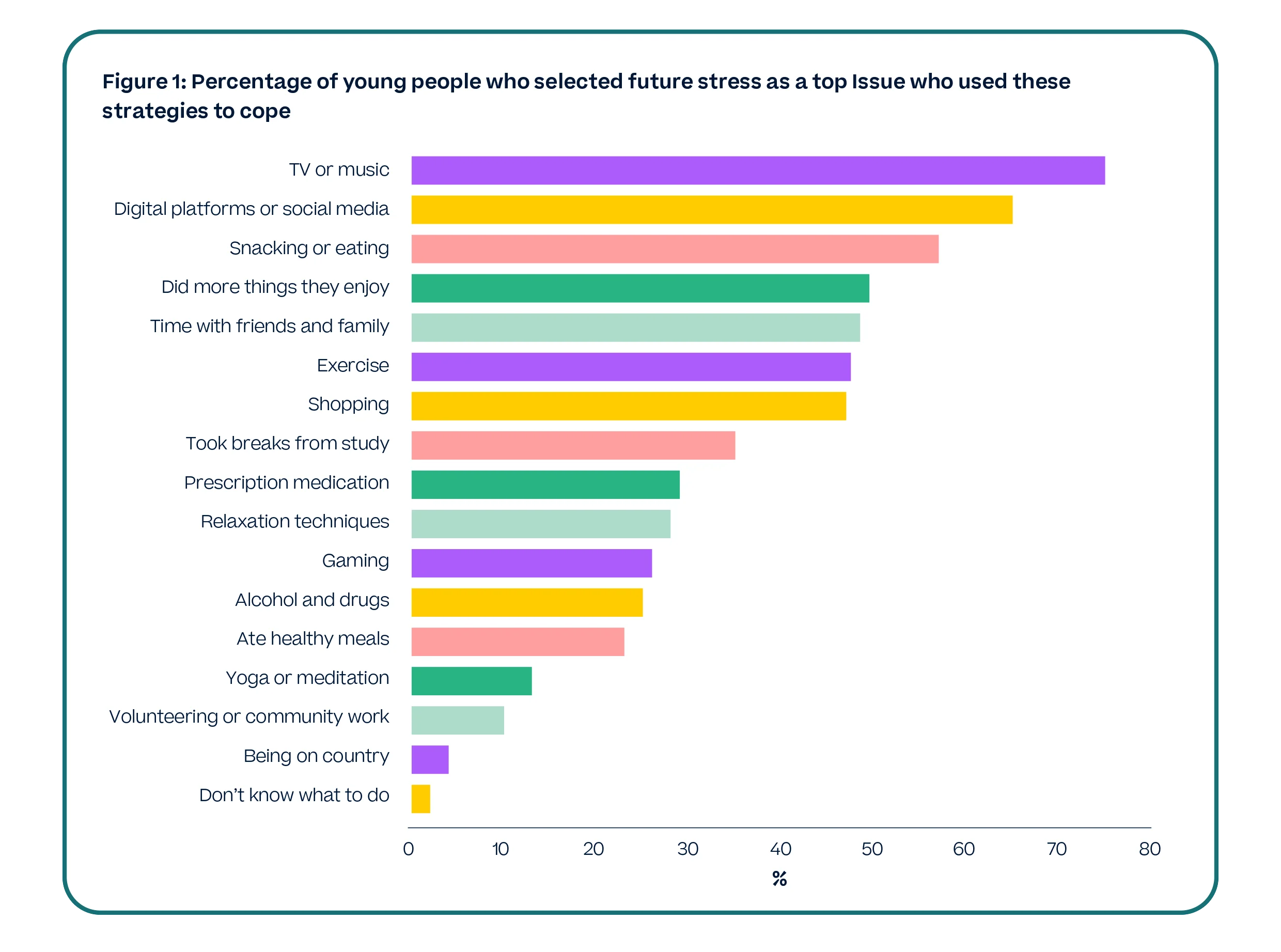
Many of the young people who named stress about the future as one of their top concerns said they coped by using strategies such as watching TV or listening to music (75%), spending time on digital platforms or social media (65%), and snacking or eating more (66%).
Young people aged 16–19 were more likely to manage their stress about the future by spending time online and gaming. Those aged 20–24 were more likely to use alcohol or drugs as a coping strategy, or to increase their physical activity or exercise, use relaxation techniques, or do meditation or yoga.
What types of support do young people need?
The majority of young people surveyed indicated they had needed some level of support to deal with their stresses over the past year. Those young people who indicated that stress about the future was a top issue for them nominated the following as their top needs:
access to someone they could talk to and trust (96%)
knowledge of where to get support (88%)
access to quality/trusted information (88%)
access to a mental health professional (77%)
connection with other people going through similar experiences (67%)
financial support to access help (65%).
Where to from here?
Despite young people experiencing high levels of stress about their future, they were clear about what might help them. We asked study participants an open-ended question about what else they needed to help them cope with their stress. Some of their responses included:
more affordable support from professionals
emotional support from people they know
practical assistance in planning their future
a break from study.
For more information and to access ReachOut support when it comes to stress about the future, including content, tips and peer support visit: ReachOut.com and ReachOut.com/Parents.
Media Enquiries
ReachOut’s office is open during business hours, Monday to Friday, 9 am – 5 pm. ReachOut cannot provide immediate or crisis support. If you need help right now, or know of someone who does, there are 24/7 services available.
Check out some of the options for young people at https://au.reachout.com/urgent-help, or for parents/carers at https://parents.au.reachout.com/emergency-contacts.
Contact Tessa Mithieux for all media enquiries on 0411 708 587 or email media@reachout.com.
Please email media@reachout.com for a copy of our media kit.